Morning Adhkar & Evening Adhkar: 9 Authentic Duas and When to Say Them
Nine authentic morning and evening adhkar in Arabic, transliteration and English, each with its hadith number and grade, plus the best times to say them, the popular adhkar we left out as weak or fabricated, and a simple way to make them a daily habit.
 By Muslim App Editorial Team12 min read

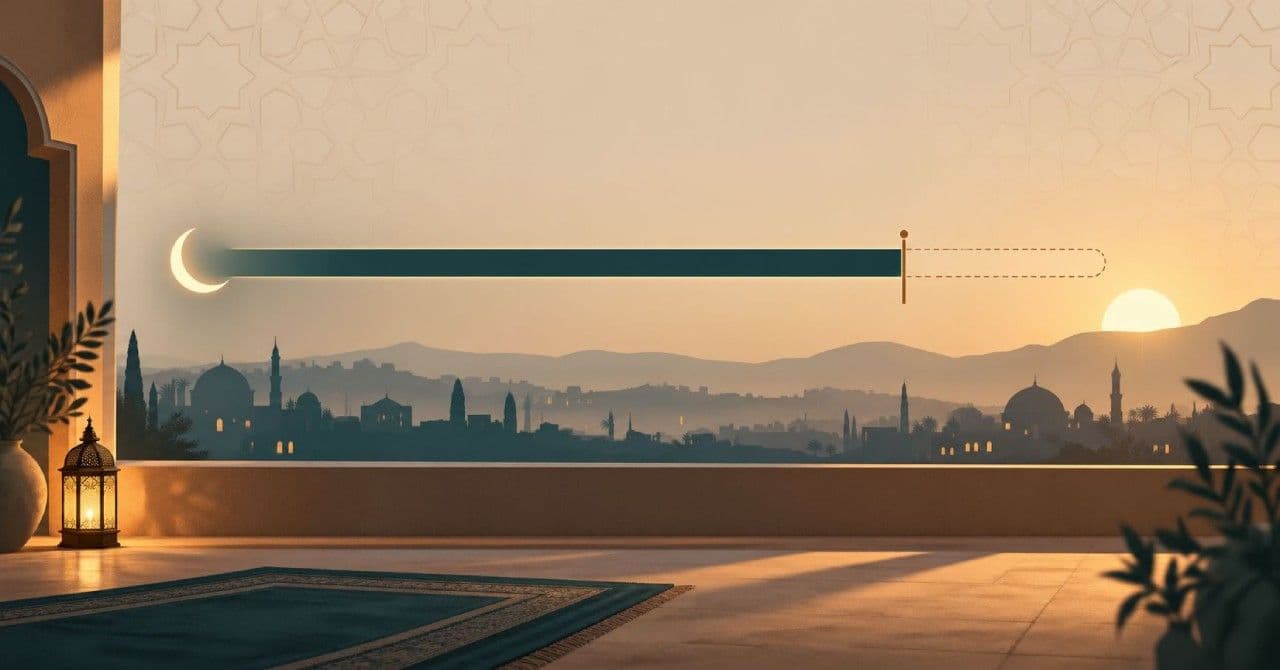
The morning and evening adhkar are short words of remembrance that the Prophet ﷺ said, and taught his Companions to say, at the two ends of the day. Egypt's Dar al-Ifta places the best time for the morning adhkar between the Fajr prayer and sunrise, and for the evening adhkar between the Asr prayer and sunset. Here are nine authentic adhkar, with their sources and grades.
Key takeaways
- Egypt's Dar al-Ifta gives the best time for the morning adhkar as after Fajr until sunrise, and for the evening adhkar as after Asr until sunset, and holds that saying them later is still valid.
- The nine authentic adhkar here include Sayyid al-Istighfar once, Bismillahil-ladhi la yadurru three times, al-Ikhlas, al-Falaq and an-Nas three times each, and SubhanAllahi wa bihamdihi 100 times, each from Bukhari, Muslim, Abu Dawud or Tirmidhi.
- Some adhkar in popular lists are graded weak or fabricated on sunnah.com, such as Allahumma inni asbahtu ushhiduka said up to four times for freedom from the Fire (Abu Dawud 5069, da'if per al-Albani).
- Most are said word for word in both sessions; two open with asbahna ("we have entered the morning") in the morning and amsayna ("we have entered the evening") in the evening. Seeking refuge in the perfect words of Allah is tied to the evening in its hadith.
- To build the habit, start with Sayyid al-Istighfar, Bismillahil-ladhi la yadurru and the three Quls right after Fajr and Asr, and add another once those are steady.
What are the morning and evening adhkar?
Adhkar (أذكار) is the plural of dhikr, the remembrance of Allah, so the two words name the same act; the morning and evening adhkar are wordings the Prophet ﷺ tied to the start and end of the day. The Quran pairs remembrance with these two times: "glorify your Lord with praise before the rising of the sun and before its setting" (Quran 20:130), and "remember Allah often, and glorify Him morning and evening" (Quran 33:41–42).
When to say morning adhkar and evening adhkar
Egypt's Dar al-Ifta (fatwa 8227) quotes texts from all four Sunni schools on this, noting that scholars differ on where each window begins and ends.
| Session | Best time | Wider window (fatwa 8227) |
|---|---|---|
| Morning | After the Fajr prayer until sunrise | From a third or half of the night until midday |
| Evening | After the Asr prayer until sunset | From midday until morning (elsewhere the fatwa says until a third or half of the night has passed) |
The fatwa concludes that saying the morning adhkar after sunrise, or the evening adhkar after sunset, is permissible and still earns the full reward. On this fatwa's view, then, after Asr is best, and after Maghrib is still valid. To see today's Fajr, Asr and Maghrib where you live, check the prayer times for your city.
9 authentic morning and evening adhkar (with sources)
Say each in the morning and again in the evening unless marked otherwise; where a hadith gives no number, say it once. Grades are those shown on sunnah.com; Bukhari and Muslim are not graded separately.
1. Sayyid al-Istighfar (once)
Shaddad ibn Aws reports that the Prophet ﷺ called this "the master of seeking forgiveness".
اللَّهُمَّ أَنْتَ رَبِّي، لاَ إِلَهَ إِلاَّ أَنْتَ، خَلَقْتَنِي وَأَنَا عَبْدُكَ، وَأَنَا عَلَى عَهْدِكَ وَوَعْدِكَ مَا اسْتَطَعْتُ، أَعُوذُ بِكَ مِنْ شَرِّ مَا صَنَعْتُ، أَبُوءُ لَكَ بِنِعْمَتِكَ عَلَىَّ، وَأَبُوءُ لَكَ بِذَنْبِي، فَاغْفِرْ لِي، فَإِنَّهُ لاَ يَغْفِرُ الذُّنُوبَ إِلاَّ أَنْتَ
Transliteration: Allahumma anta Rabbi, la ilaha illa ant, khalaqtani wa ana 'abduk, wa ana 'ala 'ahdika wa wa'dika mastata't, a'udhu bika min sharri ma sana't, abu'u laka bi-ni'matika 'alayy, wa abu'u laka bi-dhanbi, faghfir li, fa-innahu la yaghfirudh-dhunuba illa ant.
Translation: O Allah, You are my Lord; there is no god but You. You created me and I am Your servant, and I keep to Your covenant and Your promise as far as I am able. I seek refuge in You from the evil of what I have done. I acknowledge before You Your favour upon me, and I acknowledge before You my sin, so forgive me, for no one forgives sins but You.
Whoever says it during the day with firm belief and dies before evening is among the people of Paradise, and likewise whoever says it at night and dies before morning.
2. Bismillahil-ladhi la yadurru (three times)
Uthman ibn Affan reports this from the Prophet ﷺ (sahih per al-Albani).
بِسْمِ اللَّهِ الَّذِي لاَ يَضُرُّ مَعَ اسْمِهِ شَىْءٌ فِي الأَرْضِ وَلاَ فِي السَّمَاءِ وَهُوَ السَّمِيعُ الْعَلِيمُ
Transliteration: Bismillahil-ladhi la yadurru ma'asmihi shay'un fil-ardi wa la fis-sama'i wa huwas-Sami'ul-'Alim.
Translation: In the name of Allah, with whose name nothing on earth or in the heavens can cause harm, and He is the All-Hearing, the All-Knowing.
Whoever says it three times will not be struck by a sudden affliction until morning, and whoever says it three times in the morning, not until evening.
3. Al-Ikhlas, al-Falaq and an-Nas (three times each)
On a dark, rainy night, Abdullah ibn Khubayb found the Prophet ﷺ, who told him to recite "Qul huwa Allahu ahad" and the two surahs of seeking refuge three times in the evening and in the morning, saying they would suffice him against everything (Abu Dawud 5082, hasan per al-Albani). These are the last three surahs of the Quran: al-Ikhlas (112), al-Falaq (113) and an-Nas (114). Recite each in full.
4. Allahumma bika asbahna (once)
Abu Hurayrah reports that the Prophet ﷺ said this in the morning, and a shorter form in the evening (sahih per al-Albani).
اللَّهُمَّ بِكَ أَصْبَحْنَا وَبِكَ أَمْسَيْنَا وَبِكَ نَحْيَا وَبِكَ نَمُوتُ وَإِلَيْكَ النُّشُورُ
Transliteration (morning): Allahumma bika asbahna wa bika amsayna wa bika nahya wa bika namutu wa ilaykan-nushur.
Translation: O Allah, by You we enter the morning and by You we enter the evening, by You we live and by You we die, and to You is the resurrection.
اللَّهُمَّ بِكَ أَمْسَيْنَا وَبِكَ نَحْيَا وَبِكَ نَمُوتُ وَإِلَيْكَ النُّشُورُ
Transliteration (evening): Allahumma bika amsayna wa bika nahya wa bika namutu wa ilaykan-nushur.
Translation: O Allah, by You we enter the evening, by You we live and by You we die, and to You is the resurrection.
In al-Tirmidhi's version the morning form ends wa ilaykal-masir ("and to You is the return"), and the evening form keeps wa bika asbahna (Tirmidhi 3391, sahih per Darussalam).
5. Amsayna wa amsal-mulku lillah (once)
Abdullah ibn Mas'ud reports that when evening came, the Prophet ﷺ would say:
أَمْسَيْنَا وَأَمْسَى الْمُلْكُ لِلَّهِ وَالْحَمْدُ لِلَّهِ لاَ إِلَهَ إِلاَّ اللَّهُ وَحْدَهُ لاَ شَرِيكَ لَهُ لَهُ الْمُلْكُ وَلَهُ الْحَمْدُ وَهُوَ عَلَى كُلِّ شَىْءٍ قَدِيرٌ رَبِّ أَسْأَلُكَ خَيْرَ مَا فِي هَذِهِ اللَّيْلَةِ وَخَيْرَ مَا بَعْدَهَا وَأَعُوذُ بِكَ مِنْ شَرِّ مَا فِي هَذِهِ اللَّيْلَةِ وَشَرِّ مَا بَعْدَهَا رَبِّ أَعُوذُ بِكَ مِنَ الْكَسَلِ وَسُوءِ الْكِبَرِ رَبِّ أَعُوذُ بِكَ مِنْ عَذَابٍ فِي النَّارِ وَعَذَابٍ فِي الْقَبْرِ
Transliteration: Amsayna wa amsal-mulku lillah, wal-hamdu lillah, la ilaha illallahu wahdahu la sharika lah, lahul-mulku wa lahul-hamdu wa huwa 'ala kulli shay'in qadir. Rabbi as'aluka khayra ma fi hadhihil-laylati wa khayra ma ba'daha, wa a'udhu bika min sharri ma fi hadhihil-laylati wa sharri ma ba'daha. Rabbi a'udhu bika minal-kasali wa su'il-kibar. Rabbi a'udhu bika min 'adhabin fin-nari wa 'adhabin fil-qabr.
Translation: We have entered the evening, and all dominion has entered the evening belonging to Allah, and praise is for Allah. There is no god but Allah alone, without partner; His is the dominion and His is the praise, and He has power over all things. My Lord, I ask You for the good of what is in this night and the good of what comes after it, and I seek refuge in You from the evil of what is in this night and the evil of what comes after it. My Lord, I seek refuge in You from laziness and the evils of old age. My Lord, I seek refuge in You from a punishment in the Fire and a punishment in the grave.
In the morning he said the same, opening with asbahna wa asbahal-mulku lillah ("we have entered the morning, and all dominion has entered the morning belonging to Allah"). The hadith changes only the opening; many printed collections also change "this night" to "this day" (hadhal-yawm) in the morning.
6. Allahumma fatiras-samawati wal-ard (once)
Abu Bakr asked the Prophet ﷺ for words to say in the morning and evening. He taught him these, to be said in the morning, in the evening and when lying down to sleep (sahih per al-Albani).
اللَّهُمَّ فَاطِرَ السَّمَوَاتِ وَالأَرْضِ عَالِمَ الْغَيْبِ وَالشَّهَادَةِ رَبَّ كُلِّ شَىْءٍ وَمَلِيكَهُ أَشْهَدُ أَنْ لاَ إِلَهَ إِلاَّ أَنْتَ أَعُوذُ بِكَ مِنْ شَرِّ نَفْسِي وَشَرِّ الشَّيْطَانِ وَشِرْكِهِ
Transliteration: Allahumma fatiras-samawati wal-ard, 'alimal-ghaybi wash-shahadah, Rabba kulli shay'in wa malikah, ashhadu an la ilaha illa ant, a'udhu bika min sharri nafsi wa sharrish-shaytani wa shirkih.
Translation: O Allah, Originator of the heavens and the earth, Knower of the unseen and the seen, Lord and Sovereign of all things: I bear witness that there is no god but You. I seek refuge in You from the evil of my own self, and from the evil of Satan and his call to associate partners with You.
7. Allahumma inni as'alukal-'afiyah (once)
Ibn Umar said the Messenger of Allah ﷺ never left these supplications in the evening or the morning (sahih per al-Albani).
اللَّهُمَّ إِنِّي أَسْأَلُكَ الْعَافِيَةَ فِي الدُّنْيَا وَالآخِرَةِ اللَّهُمَّ إِنِّي أَسْأَلُكَ الْعَفْوَ وَالْعَافِيَةَ فِي دِينِي وَدُنْيَاىَ وَأَهْلِي وَمَالِي اللَّهُمَّ اسْتُرْ عَوْرَاتِي وَآمِنْ رَوْعَاتِي اللَّهُمَّ احْفَظْنِي مِنْ بَيْنِ يَدَىَّ وَمِنْ خَلْفِي وَعَنْ يَمِينِي وَعَنْ شِمَالِي وَمِنْ فَوْقِي وَأَعُوذُ بِعَظَمَتِكَ أَنْ أُغْتَالَ مِنْ تَحْتِي
Transliteration: Allahumma inni as'alukal-'afiyata fid-dunya wal-akhirah. Allahumma inni as'alukal-'afwa wal-'afiyata fi dini wa dunyaya wa ahli wa mali. Allahummastur 'awrati wa amin raw'ati. Allahummahfazni min bayni yadayya wa min khalfi wa 'an yamini wa 'an shimali wa min fawqi, wa a'udhu bi-'azamatika an ughtala min tahti.
Translation: O Allah, I ask You for well-being in this world and the Hereafter. O Allah, I ask You for pardon and well-being in my religion and my worldly life, my family and my wealth. O Allah, cover my faults and calm my fears. O Allah, guard me from in front of me and behind me, from my right and my left, and from above me, and I seek refuge in Your greatness from being taken unawares from beneath me.
The text above follows the wording of Abu Dawud's teacher Uthman ibn Abi Shaybah, with "faults" in the plural; the other wording has the singular, "cover my fault".
8. SubhanAllahi wa bihamdihi (100 times)
سُبْحَانَ اللَّهِ وَبِحَمْدِهِ
Transliteration: SubhanAllahi wa bihamdih.
Translation: Glory be to Allah, and praise be to Him.
Abu Hurayrah reports the Prophet ﷺ as saying that whoever says it a hundred times in the morning and in the evening, no one will bring anything better on the Day of Resurrection than what he brings, except someone who said the same or more.
9. Evening only: A'udhu bi-kalimatillahit-tammat (three times)
A man told the Prophet ﷺ that a scorpion had stung him the night before. The Prophet ﷺ said that had he said these words when evening came, it would not have harmed him (Muslim 2709a and 2709b, from Abu Hurayrah).
أَعُوذُ بِكَلِمَاتِ اللَّهِ التَّامَّاتِ مِنْ شَرِّ مَا خَلَقَ
Transliteration: A'udhu bi-kalimatillahit-tammati min sharri ma khalaq.
Translation: I seek refuge in the perfect words of Allah from the evil of what He has created.
Sahih Muslim 2709a
The number comes from another narration: whoever says it three times in the evening will not be harmed by a venomous sting that night (Tirmidhi 3604b; al-Tirmidhi: hasan; Darussalam: sahih).
Which popular adhkar are weak or fabricated?
Popular lists often include the reports below. On sunnah.com each is graded weak (da'if) or fabricated (mawdu'), or its gradings conflict.
| Dhikr | Source | Grade |
|---|---|---|
| Allahumma inni asbahtu ushhiduka…, up to four times, for freedom from the Fire | Abu Dawud 5069 | Da'if (al-Albani) |
| Radina billahi Rabban… | Abu Dawud 5072; Tirmidhi 3389 | Da'if (al-Albani); al-Tirmidhi: hasan gharib |
| Allahumma ma asbaha bi min ni'matin… | Abu Dawud 5073 | Da'if (al-Albani) |
| Hasbiyallahu la ilaha illa huwa… seven times, as words of Abu al-Darda' | Abu Dawud 5081 | Mawdu' (al-Albani) |
| Asbahna wa asbahal-mulku lillahi Rabbil-'alamin… khayra hadhal-yawm, fathahu wa nasrahu… | Abu Dawud 5084 | Da'if (al-Albani) |
| Allahumma inni a'udhu bika minal-hammi wal-hazan… as a morning and evening dua | Abu Dawud 1555 | Da'if (al-Albani) |
The words in the last row are not the problem: essentially the same supplication, with no set time, is in Sahih al-Bukhari 6369, so you can say it whenever you like.
How to make morning and evening adhkar a daily habit
Tie them to Fajr and Asr
Each best time begins right after a prayer you already pray, so stay seated after Fajr and after Asr and say the adhkar before you get up. If Fajr itself is the hard part, start with waking up for Fajr; if Asr slips away in a busy afternoon, see our guide to missing Asr.
Start with three, then add
The Prophet ﷺ said the deeds most beloved to Allah are the most consistent, even if small (Sahih al-Bukhari 6464). Begin with numbers 1, 2 and 3 above, and add another once those are steady.
Same text, same order
Use one source, such as a printed card or this page, and keep the same order, so you notice when one is missing. Count repetitions on your fingertips, as the Prophet ﷺ told women among the Companions to do (Abu Dawud 1501, hasan per al-Albani).
Say them with meaning
The Quran describes this remembrance as done "within yourself, humbly and in awe, without raising your voice, in the mornings and the evenings", and adds, "do not be among the heedless" (Quran 7:205). Read each translation a few times, so the Arabic carries its meaning when you say it.
Frequently asked questions
Mostly, yes. Six of the nine are said word for word in both sessions, and two change their opening words: asbahna ("we have entered the morning") becomes amsayna ("we have entered the evening") (Sahih Muslim 2723b; Sunan Abi Dawud 5068, whose evening form is also shorter). One of the nine, seeking refuge in the perfect words of Allah three times, is tied to the evening in its hadith (Jami' al-Tirmidhi 3604b).
About the author

Muslim App Editorial Team writes practical guides on prayer, building a consistent salah habit, and Muslim life at work and on the road. Where an article touches on religious rulings, it gives its sources and, where scholars or the four Sunni schools differ, says so rather than presenting one view as the only one; questions that depend on your situation are left to a qualified scholar. Our articles are not fatwas.